


ADULTS (AGES 18+)
This list has resources for autistic adults of all ages and abilities and for the families and friends who support them. It is organized alphabetically by topic. Please peruse the FAQs for Self-Advocates and FAQs for Parents and Caregivers for an introduction to the common needs of adults with autism and an overview of the resource topics.
We are here to help you, or your child, live as independently as possible as an adult. We are just a phone call away with information and resources. If you would like to speak with a Resource Coordinator, visit this web page for the contact information. Or contact our main office at 410-290-3466 or info@autismsocietymd.org.
The Autism Society of Maryland provides information and resources to the community but does not recommend, guarantee or promote these services and/or interventions. The listing of any organization or provider does not imply endorsement by the Autism Society of Maryland staff or Board of Directors. If you have suggestions of additional resources or services to add or corrections to the content here, please contact our office at 410-290-3466 or info@autismsocietymd.org.
These are a few of the common questions we hear from autistic adults. For more in-depth information, see our resources for adults page or contact an AUSOM resource coordinator to discuss your situation.
I think I might be autistic. I’m interested in getting a diagnosis. How do I get started?
Seeking an evaluation for an autism diagnosis as an adult is a personal decision. Many adults pursue a diagnosis to better understand themselves, access accommodations, improve relationships, connect with the autistic community, or qualify for certain services and supports. Others may find that self-identification meets their needs. To receive an autism diagnosis, you'll need to get a psychological or neuropsychological evaluation from a licensed psychologist who specializes in adult autism evaluations.
What are the advantages of applying for government benefits as an adult? How do I qualify?
You may be eligible for government benefits and services that can provide financial assistance, healthcare coverage, long-term disability services, and employment support. All benefits programs have an application process for determining eligibility and services.
One of the most common benefits is Supplemental Security Income (SSI), a federal program that provides monthly financial support to individuals with disabilities who meet medical and financial eligibility requirements. SSI recipients automatically qualify for Medicaid, which can provide coverage for healthcare and funding for DDA services.
In Maryland, eligible individuals can receive services through the Developmental Disabilities Administration (DDA), which provides support with employment, community engagement, daily living, and housing. The Division of Rehabilitation Services (DORS) offers employment-focused services such as career counseling, job training, college support, assistive technology, and job placement assistance.
Eligibility for Social Security and DDA benefits requires that the recipient have no more than $2,000 in assets in their name at any time. This asset limitation can be circumvented by setting up an ABLE account or a special needs trust.
What are my options if I have a mental health crisis?
Experiencing a mental health crisis can feel overwhelming but support is available. If you are struggling with intense emotions, anxiety, depression, thoughts of self-harm, or another urgent mental health concern, it is important to reach out for help as soon as possible. If the situation is not a life-threatening emergency, consider contacting the 988 Suicide & Crisis Lifeline by calling or texting 988 to connect with a trained counselor. These services are available 24 hours a day by phone or text.
If you need immediate support and do not feel safe going through the crisis with someone by phone or virtually, your county's Mobile Crisis Team may be able to come to you and provide in-person assistance. Mobile Crisis Teams are staffed by mental health professionals, in partnership with law enforcement, who can help de-escalate a situation, assess needs, and connect individuals and families with appropriate follow-up services. Psychiatric urgent care services, such as Sheppard Pratt's walk-in clinic, are also an option when support from a medical professional is needed.
How can I find a job that is a good fit?
Finding a job that matches your interests, strengths, support needs, and long-term goals can take time, but there are many resources available to help. Employment support services can help you explore career options, identify jobs that are a good fit for your skills and interests, develop your workplace skills, and prepare for job interviews.
The Maryland Division of Rehabilitation Services (DORS) helps people with disabilities reach their employment goals by offering individualized support services. Based on your goals and needs, DORS services may include career counseling, vocational assessments, job training, assistive technology, college and post-secondary education support, job placement assistance, and other employment-related supports.
Other employment programs and government agencies, such as the Autism Hiring Program and American Job Centers, also help job seekers build skills, increase confidence, and work toward obtaining and maintaining meaningful employment. These programs can help you explore career paths, identify inclusive employers, develop workplace skills, and connect with employment opportunities.
What housing options are available for autistic adults?
Finding the right housing situation is an important part of building an independent and fulfilling adult life. The best option depends on a person's goals, support needs, and desired level of independence. Some autistic adults choose to live independently in their own home or apartment, while others may live with roommates, share a home with family members, or participate in shared living arrangements that offer varying levels of support.
Whether your goal is to live independently or with some level of support, housing planning is often most successful when it starts well before a move is needed. Your housing plan will depend on financial resources, transportation, employment, and community connections, among other factors.
How can I build friendships and find social opportunities in my community?
Meaningful social connections are an important part of health, happiness, and overall well-being. For autistic adults, finding people who share similar interests and experiences can make social interactions more comfortable and rewarding.
Opportunities for connecting with others, including autistic adults, have greatly expanded. They include autism-specific social groups, recreational programs, volunteer activities, arts organizations, and community events. Some individuals enjoy structured social groups designed specifically for autistic adults, while others prefer interest-based activities that attract participants of all abilities. Many organizations offer both virtual and in-person options, making it easier to find opportunities that match your preferred way of socializing and schedule.
What transportation options are available? What if I want to learn how to drive?
Reliable transportation can increase independence and make it easier to access employment, education, healthcare, social activities, and community resources.
Many autistic adults use public transportation, ride-share services, mobility services, or a combination of these options. If using a bus or other public transit system feels overwhelming, travel training programs can help you learn how to use fixed-route transportation safely and confidently.
For some autistic adults, learning to drive is an important step toward greater independence. While driving might present unique challenges related to attention, sensory processing, anxiety, or decision-making, many autistic adults become safe and successful drivers. Some drivers’ ed programs specialize in providing accommodations to help autistic adults overcome these challenges. In the end, learning to drive is a personal decision that relies on understanding how autism might impact your driving ability.
These are a few of the common questions we hear from parents and caregivers. For more in-depth information, see our resources for adults page or contact an AUSOM resource coordinator to discuss your situation.
What is the difference between Supported Decision-Making, Power of Attorney, and Guardianship?
As your autistic child grows into adulthood, you may wonder how decisions will be made and who will provide support when you are no longer able to do so. Every adult child’s ability to make decisions is unique. Many autistic adults can make their own decisions but still benefit from guidance from trusted family members, friends, or professionals. Others are not as equipped to make decisions for themselves. You and your child must decide what amount of guidance or support will be needed in order for your child to live as independently as possible.
Supported Decision-Making allows your child to develop, in collaboration with the family, his or her person-centered plan for support. This is not a legal agreement. Your child retains full legal rights and independence while receiving support from people who are trusted to understand options and help your child make informed choices. A Power of Attorney allows your child to voluntarily authorize another person to act on their behalf in specific areas, such as healthcare or finances. Guardianship is the most restrictive option and involves a court granting a family member or someone else full authority to make decisions for your child, who will not retain certain legal rights.
How do I plan for my adult child's financial future and long-term support needs?
Planning for the future helps ensure that financial resources, government benefits, and medical/therapeutic supports and services remain available to your child throughout adulthood. Key areas to consider include employment, housing, healthcare, government benefits, and who will provide support when parents or caregivers are no longer able to do so.
Several tools are available to safeguard government benefits while maintaining financial security. Maryland ABLE accounts allow eligible individuals with disabilities to earn, save and control their money without losing certain government benefits. A Special Needs Trust (SNT) is another way to provide financial security without jeopardizing eligibility for government benefits. An SNT requires a trustee to manage the assets on behalf of your child. Because every family's situation is different, consulting with an attorney or financial planner who specializes in disability planning can be helpful.
Starting these conversations early and putting a plan in place can provide peace of mind and help ensure that your adult child's goals, preferences, and quality of life remain at the center of future planning.
What is DDA? How does it support adults? When should my child apply?
The Maryland Developmental Disabilities Administration (DDA) provides services and supports designed to help eligible individuals live meaningful lives in their communities. Your child can apply for DDA eligibility at any age, but it is beneficial to apply while your child is still in school. Once DDA eligibility is established, your adult child may or may not qualify for services at age 21. However, if there is a change in your child’s circumstances later in life due to a health or family crisis, your child could qualify to receive services. Establishing DDA eligibility early is the key.
DDA services are funded through a Medicaid waiver called the Community Pathways Waiver. When approved for waiver services, you and your child will develop an individualized Person-Centered Plan (PCP) based on your child’s needs and goals. Some individuals use DDA services primarily to find and maintain employment through career exploration, job skill development and job coaching. Others may receive assistance in daily living activities, community engagement, social opportunities, and long-term housing needs. The PCP could contain any combination of these supports.
Families may choose between two service models. In the traditional service model, the services are managed and coordinated by licensed DDA service providers. In the self-directed model, you and your child assume the role of the DDA service provider: hiring staff, who could be family members, setting wage and work schedules, and coordinating services.
Even if your adult child is currently doing well and does not require extensive services, establishing DDA eligibility can make it easier to access supports later in life or in a crisis situation. Many families view DDA eligibility as part of their long-term planning strategy, ensuring that options are available if circumstances change in the future.
Should my adult child apply for SSI?
Many autistic adults may qualify for Supplemental Security Income (SSI). SSI is a federal benefit awarded by the Social Security Administration. SSI provides monthly financial assistance to individuals with disabilities who meet medical and financial eligibility requirements. There is no downside to applying for SSI eligibility. Your child is encouraged to do so shortly after turning 18.
For some individuals, SSI serves as an important source of income and includes access to Medicaid coverage for healthcare and DDA services. Eligibility is based on your adult child’s disability and financial circumstances, so families should understand how income, savings, and assets greater than $2,000 in the child’s name can affect eligibility. Applying can be a long and complex process, but the long-term benefits can be significant for individuals who qualify.
How can my adult child get support in finding and keeping a job?
Finding meaningful employment can be challenging, and many autistic adults benefit from guidance and support throughout the job search process. Fortunately, there are a variety of programs in Maryland that help individuals identify career interests, build workplace skills, search for jobs, prepare for job interviews, and succeed once they are employed.
The Division of Rehabilitation Services (DORS) helps individuals with disabilities prepare for, obtain, and maintain employment. Services may include career counseling, vocational assessments, job training, college or post-secondary education support, assistive technology, resume and interview assistance, and job placement services.
Other employment programs and government agencies, such as the Autism Hiring Program and American Job Centers, also help job seekers build skills, increase confidence, and work toward obtaining and maintaining meaningful employment. These programs can help your child explore career paths, identify inclusive employers, develop workplace skills, and connect with employment opportunities.
How can I help my adult child during a mental health crisis?
Mental health challenges such as anxiety, depression, and emotional dysregulation can affect autistic adults at any age. Having a plan before a crisis occurs can help families respond more effectively.
If your adult child is experiencing a crisis that does not involve immediate danger, resources such as the 988 Suicide & Crisis Lifeline, Crisis Text Line, local Mobile Crisis Teams, and psychiatric urgent care services may provide support. Your county's Mobile Crisis Team may be able to come to you and provide in-person assistance. Mobile Crisis Teams are staffed by mental health professionals, in partnership with law enforcement, who can help de-escalate a situation, assess needs, and connect individuals and families with appropriate follow-up services.
How can I help my adult child build friendships and community connections?
Meaningful relationships contribute significantly to happiness, confidence, and overall well-being. While some autistic adults naturally build friendships through work, school, or community involvement, others may benefit from more structured opportunities to connect with peers.
Social groups, recreational programs, volunteer opportunities, sports, arts programs, faith communities, and autism-specific groups such as the AUSOM Adult Social Group can all provide opportunities to develop friendships and social confidence. Encouraging exploration of activities aligned with your adult child's interests is often one of the most effective ways to build lasting social connections.
Autism Society of America Adult Resources
Association for Autism and Neurodiversity (AANE)
https://aane.org/autism-info-faqs/adult-life/
Pathfinders for Autism Provider Directory
https://pathfindersforautism.org/providers-services/
Seeking an autism evaluation is not an easy decision to make but it can be life-changing in expected and unexpected ways. We encourage individuals seeking a diagnosis to talk with a friend or family member to explore the reasons why you'd like to get a diagnosis. It's helpful to have a support network during this process of discovery. For example,
- What do I want to gain from a diagnosis?
- What are the practical realities for employment, home life, relationships, etc.?
- What are the alternatives to a formal medical diagnosis?
Receiving an Autism diagnosis as an adult takes time mainly because many providers have waitlists. Some providers offer in-person and virtual evaluations. You will want to research the options to find the best fit for you. It can also be expensive if your health insurance will not cover it.
MAKING THE DECISION
Autism Diagnosis for Adults: Frequently Asked Questions [Autism Society of North Carolina]
https://www.autismsociety-nc.org/autism-diagnosis-adults/
Autism Diagnosis in Adulthood [AUSOM Webinar, 2025] was a panel discussion on factors in making the decision to seek a formal evaluation and navigating the process and outcome of an Autism diagnosis as an adult. Dr. Vince Culotta and Dr. Meghan Jorgenson
https://youtu.be/OoDEodzeahM?si=SGzVWl9AN91N8NgL
Diagnosing Autism in Adults: Why is it so hard? [Association for Autism and Neurodiversity (AANE)]
https://aane.org/autism-info-faqs/library/diagnosing-autism-in-adults-why-is-it-so-hard/
Other resources: https://aane.org/autism-info-faqs/autism-basics/diagnosis/
FINDING A PROVIDER
If you decide to proceed, contact providers to learn more about how they do the assessment (virtual or in-person), the cost, what insurance they accept, if any, and what supports they can provide after the diagnosis is established. Ask questions such as
- How experienced are you in working with autistic adults and/or individuals who mask?
- In what ways is your approach to testing neurodiversity-affirming?
Pathfinders for Autism online provider directory – Choose the category “Getting Diagnosed – Adult” and search by distance and zip code.
https: //pathfindersforautism.org/providers-services/
AUSOM can provide a list of providers, including those that accept Medicaid, upon request.
UNDERSTANDING THE DIAGNOSIS
Under construction
Adults with autism are frequently diagnosed with one or more behavioral health conditions. These conditions, such as anxiety, OCD, depression or ADHD can impact all areas of life from relationships and employment to education and acquiring life skills. Caregivers and providers should understand that symptoms and behaviors of depression and anxiety may be different in those with an autism diagnosis. Finding a psychologist who works with adults with autism and takes a neurodiversity-affirming approach can be helpful.
TIPS ON HOW TO CHOOSE A PROVIDER
Tips for Finding a Diagnostician or Other Mental Health Professional [Association for Autism and Neurodiversity (AANE)]
https://aane.org/autism-info-faqs/library/tips-for-finding-a-diagnostician-or-other-mental-health-professional/
Autistic Adult Therapy: How to Find the Right Mental Health Professional [NeuroLaunch] https://neurolaunch.com/therapist-for-autistic-adults/
How to Choose a Therapist [Psychology Today]
https://www.psychologytoday.com/us/blog/the-high-functioning-hotspot/202209/how-choose-therapist
Howard County Behavioral Health Navigation connects individuals and families to mental health resources in the community.
Website: https://www.howardcountymd.gov/health/behavioral-health-navigation
To contact a Behavioral Health Navigator, call 410-313-6202 or email hnavigator@howardcountymd.gov
FINDING A PROVIDER
If using insurance to cover the cost of therapy, consider requesting care coordination services. A care coordination professional can assist in developing a customized list of therapists. A similar list can be generated through the patient portal. Sometimes it can take meeting with several therapists to find the right fit.
County Health Departments
- Behavioral Health Resources and Services Directory [Maryland Hospital Association]
- Anne Arundel County Mental Health Agency
https://aamentalhealth.org/
Call 410-222-7858 - Howard County Behavioral Health - Network of Care Directory of Services
https://mentalhealth.networkofcare.org/howard-md
Call 410-313-6202 or email hnavigator@howardcountymd.gov
- Montgomery County Behavioral Health and Crisis Services
MoCo Dept of Health and Human Services (DHHS)
https://www.montgomerycountymd.gov/department-health-human-services/about-us/behavioral-health-crisis-services - Call 410-777-4000
Find a Therapist [Psychology Today]
https://www.psychologytoday.com/us/therapists?msockid=0c3a09e627546eba2f241c8f263b6fb2
National Alliance on Mental Illness (NAMI) Local chapters offer family support groups and classes.
http://www.namimd.org/
Find your local NAMI affiliate: https://namimd.org/interactive-affiliate-map/
Neurodivergent Therapists in Maryland
https://ndtherapists.com/maryland/
Pathfinders for Autism online provider directory
https://pathfindersforautism.org/providers-services/
The Resource Finder [KKI Maryland Center for Developmental Disabilities]
https://www.kennedykrieger.org/community/initiatives/resource-finder
Call 800-390-3372
Make an online request
https://apricot.socialsolutionsportal.com/apricot-intake/c0319b6e-a5a6-4713-bdc9-ff34574076b3
WHAT TO DO IN A CRISIS
WARM LINES / HOT LINES / WALK-IN CLINICS
Adults with autism are more likely to visit the ER for psychiatric reasons than the general population. If you are in a crisis but it is not a true emergency where someone’s life is in danger, we recommend contacting one of the following services rather than calling 911 or visiting an emergency room.
- 988 Suicide and Crisis Lifeline: Dial “988” for emotional support from a counselor by phone
https://988helpline.org/ - 988 Information for the Autism Community [PDF, 2024]
https://www.autismcrisissupport.com/_files/ugd/e747a4_7fbfdaa3812449138e5ab5623bdc9dd0.pdf - Crisis Text hotline: Text “HOME” to 741741 for free counseling 24/7 https://www.crisistextline.org/
- Chat hotline: https://connect.crisistextline.org/chat?utm_source=homepage
- Mental health crisis warm lines that avoid police intervention for people from marginalized groups, including a Blackline, Trans Lifeline, LGBT National Help Center, and more
https://www.inclusivetherapists.com/crisis#warmlines - Sheppard Pratt Walk-in Clinic for psychiatric urgent care
https://www.sheppardpratt.org/locations-directions/details/outpatient-mental-health-center-columbia/
PFA Tips: Communication Tips for Supporting an Autistic Person in Crisis
https://pathfindersforautism.org/articles/healthcare/pfa-tips-communication-tips-for-supporting-an-autistic-person-in-crisis/
MOBILE CRISIS TEAM
If the situation has escalated and you need assistance in the home, contact your county’s Mobile Crisis Team. Mental health professionals, in partnership with law enforcement, are dispatched to the individual’s location to de-escalate the situation and support the person in crisis. MCT will refer the individual and family members to community resources for services and follow-up.
- Anne Arundel County Community Warmline (Mobile Crisis Team): 410-768-5522
https://aamentalhealth.org/programs-services/crisis-services - Howard County Grassroots Crisis Intervention Center (Mobile Crisis Team): 410-531-6677
https://howard.md.networkofcare.org/mh/services/agency.aspx?pid=HowardCountyMobileCrisisTeamMCT_2_679_0 - Montgomery County Crisis Center (Mobile Crisis Team): 240-777-4000 https://www.montgomerycountymd.gov/department-health-human-services/about-us/behavioral-health-crisis-services/crisis-center
SUICIDE AND AUTISM
Warning Signs of Suicide for Autistic People [Autism and Suicide Prevention Workgroup, pdf]
https://www.autismcrisissupport.com/_files/ugd/e747a4_ebe62eeb3f124681abda180bbda0cf82.pdf
Reasons for Living Suicide Prevention Resource [Autism and Suicide Prevention Workgroup, pdf]
https://www.autismcrisissupport.com/_files/ugd/e747a4_aee42329db514a5784a8261baac28bee.pdf
Crisis Supports for the Autism Community [Autism and Suicide Prevention Workgroup, pdf]
https://www.autismcrisissupport.com/_files/ugd/e747a4_61056b2d41cc4ea5b9f053c21ce0fbce.pdf
Autism Resource for Warning Signs of Suicide [Autism and Suicide Prevention Work Group, pdf]
https://www.autismcrisissupport.com/_files/ugd/3218de_2665d8802fb2483b8a1c6494705713dc.pdf
PFA Tips: Supporting an Autistic Person Experiencing Suicidality
https://pathfindersforautism.org/articles/healthcare/pfa-tips-supporting-an-autistic-person-experiencing-suicidality/
TRAUMA SUPPORT
Maryland Coalition Against Sexual Assault (MCASA)
https://mcasa.org
NAMI Maryland offers education, support groups, and resources for individuals experiencing mental health challenges.
https://namimd.org
Autistic adults are more likely to be unemployed or underemployed than the general population. Job seekers oftentimes need assistance identifying job opportunities that are a good fit and completing the interview process. There may also be considerations about disclosing a disability and/or requesting accommodations to ensure success on the job and long-term employment. Here are some programs and resources for developing workplace skills, seeking jobs, and remaining employed.
EMPLOYMENT RESOURCES BY COUNTY IN MARYLAND
American Job Centers (U.S. Department of Labor’s Employment and Training Administration) provide free assistance to job seekers for a wide range of employment and career-related needs. Visit the website to locate one of 2,300 nationwide centers near you.
https://www.careeronestop.org/LocalHelp/AmericanJobCenters/american-job-centers.aspx
https://labor.maryland.gov/county/
ANNE ARUNDEL: Anne Arundel Workforce Development Corporation (AAWDC)
https://www.aawdc.org/
- Future Success Summer Internship Program
FutureSuccess Summer 2026 Internship Program Eligibility Form - Anne Arundel County | Anne Arundel Workforce Development Corporation (AAWDC) Careers - Next Success Program offers long-term career coaching, training and employment opportunities available outside of the summer program.
NextSuccess Interest Form
CARROLL: Carroll County Workforce Development Center
https://carrollworks.com/
HOWARD: Howard County Office of Workforce Development
https://www.howardcountymd.gov/workforce-development
- Columbia Workforce Development Center
https://www.howardcountymd.gov/workforce-development/workforce-development-centers - Summer Youth Employment Program
https://www.howardcountymd.gov/youth-services
MONTGOMERY: WorkSource Montgomery
https://worksourcemontgomery.com/home/job-seekers/
PRINCE GEORGE’S: Prince George’s County American Job Center
https://www.labor.maryland.gov/county/pg/
- Employ Prince George’s serves as the principal workforce development entity for Prince George’s County Government. https://www.employpg.org/
- Project HIRE Disability Apprenticeship Program is run by Prince George’s County Health and Human Services.
https://www.princegeorgescountymd.gov/departments-offices/family-services/older-adult-services/project-hire-disability-apprenticeship-program
STATE EMPLOYMENT RESOURCES IN MARYLAND
Developmental Disabilities Administration (DDA) offers employment supports to individuals who are eligible and receiving services. Community Pathways Waiver services can include job coaching, follow-along supports and career research/job search training as developed in the individual’s Person-Centered Plan.
https://health.maryland.gov/dda/Pages/Services/Employment-Services.aspx
Division of Rehabilitation Services (DORS) DORS Vocational Rehabilitation (VR) services include career assessment and counseling, assistive technology, job training, higher education support, and job placement. DORS accepts self-referrals and provides short-term services at any time in adulthood.
https://dors.maryland.gov/consumers/Pages/referral.aspx
- Online DORS application
https://survey.alchemer.com/s3/5391921/DORS-Online-Referral-for-Direct-Input-Into-AWARE - Downloadable DORS Application
https://dors.maryland.gov/crps/Documents/RS_01c_Application-fillable.pdf - Maryland Apprenticeship and Training Program (MATP) offers registered apprenticeships that connect job seekers with Maryland employers while building career pathways.
Office of Apprenticeship: https://www.dllr.state.md.us/employment/appr/
Apprenticeship Locator: https://labor.maryland.gov/employment/appr/apprsearch.shtml
Occupation Database: https://www.labor.maryland.gov/employment/approcc/approcc.shtml
Maryland Division of Workforce Development and Adult Learning
https://labor.maryland.gov/employment/
Maryland Department of Service and Civic Innovation oversees two service-based employment programs—Maryland Corps and AmeriCorps Maryland.
https://dsci.maryland.gov/about-us
- The Maryland Corps/Service Year Option Program empowers residents 18+ to serve their communities while building professional skills in a supportive environment. They connect program Members with Host Site Partners—nonprofits, government agencies and businesses—based on interests.
https://dsci.maryland.gov/members/mcsyo - AmeriCorps Maryland enables members to choose between full- and part-time positions. In return for your service, you’ll receive a living stipend, access to education awards for tuition or loans, and valuable professional development to launch your future career.
https://dsci.maryland.gov/americorps-md
Maryland Workforce Exchange is a valuable online tool for job searching and workforce services.
https://mwejobs.maryland.gov/vosnet/
https://mwejobs.maryland.gov/vosnet/default.aspx
Maryland Works provides resources for inclusive employment for job seekers, employers and providers.
https://mdworks.com/
OTHER RESOURCES FOR JOB SEEKERS
Autism Hiring Program (AHP) advances workplace neurodiversity and acceptance, connecting businesses to an untapped workforce of skilled Autistic adults and targeting jobseekers not supported by existing systems. The program serves individuals not supported by government programs such as DORS or DDA in the central Maryland and Baltimore area. An initiative of the Autism Society of Maryland in partnership with Towson University
Program description, application and session dates: https://howard-Autism.org/Autism-hiring-program/
Autism Society of America Employment Initiative
https://autismsociety.org/employment/
Broad Futures offers internship opportunities to neurodivergent adults age 18-26 in the greater Washington DC area.
https://broadfutures.org/
Career Circle at GettingHired.com is a job search platform that connects candidates with inclusive employers.
https://www.gettinghired.com/
CareerOneStop [US Dept of Labor] provides job seekers of all ages and abilities support with exploring career options, finding training and education, conducting job searches and connecting with other services.
https://www.careeronestop.org/
Career Centers at community colleges often provide career counseling and other services to all county residents, as well as students.
- Anne Arundel Community College Career and Community Services
https://www.aacc.edu/resources/career-and-community-services/ - Community College of Baltimore County offers counseling and access to career building tools
https://www.ccbcmd.edu/Student-Life/Student-Support/Career-Services/index.html - Frederick Community College offers walk-in support and access to job search resources
https://guides.frederick.edu/careers - Howard Community College Career Services offers counseling, access to online career planning tool FOCUS-2 and job search tool Handshake, and job fairs
https://www.howardcc.edu/services--support/career-services/ - Montgomery College offers counseling through the Starfish reservation system and other job search services
https://www.montgomerycollege.edu/life-at-mc/student-career-and-employment-services/index.html
Centers for Independent Living (CIL) are disability-led organizations that provide resources, advocacy, and support for people with disabilities to grow in independence and lead self-directed lives. Assistance can include help navigating employment and housing. Availability of services varies by location. Locate your nearest CIL here.
https://acl.gov/programs/aging-and-disability-networks/centers-independent-living
- Accessible Resources for Independence (ARI) serves Anne Arundel and Howard Counties
https://arinow.org/
- Freedom Center serves Carroll and Frederick counties
https://thefreedomcenter-md.org/
- IMAGE Center of Maryland serves Baltimore City and Baltimore and Harford Counties
https://imagemd.org/ - Independence Now serves Montgomery and Prince George’s Counties
https://www.innow.org/
Empowerment in Employment: Proven Strategies for Job Seekers with Disabilities [Maryland Works]
https://mdworks.com/post/2024/01/22/empowerment-in-employment-proven-strategies-for-job-seekers-with-disabilities/
A Guide for Career Seekers With Disabilities [Transition Work Group of Montgomery County in collaboration with Montgomery County Public Schools] provides job-search tips and resources
https://pcr-inc.org/wp-content/uploads/2020/09/Jobs-2020-FINAL.pdf
Hire Autism [Organization for Autism Research] provides step-by-step guides that walk job seekers through the job search process, including researching job openings, filling out job applications, and writing resumes and cover letters.
https://researchautism.org/job-seeker-resources/
Howard Community College
- Central Maryland Logistics Workforce Pipeline Partnership project
- Workforce Recruitment Program
Ticket to Work [Social Security Administration] supports individuals receiving SSDI or SSI who are interested in returning to work or starting employment. Available to individuals ages 18–64. https://choosework.ssa.gov/
University of Maryland Autism Research Consortium (UMARC) is an interdisciplinary group of researchers, clinicians, service providers, and autistic advocates. Programs support children, UMD students and autism families in Maryland.
Website: https://autism.umd.edu/
UMARC Community-wide Learning About Autism Speaker Series (CLASS) materials and podcasts
https://autism.umd.edu/resources/speaker-series/
WHEN / HOW / IF TO DISCLOSE A DISABILITY
ADA National Network
https://adata.org/factsheet/reasonable-accommodations-workplace
CareerOneStop
https://www.careeronestop.org/ResourcesFor/WorkersWithDisabilities/disclosing-a-disability.aspx
Job Accommodations Network (JAN)
https://askjan.org/topics/Disability-Disclosure.cfm
Kennedy Krieger Institute
https://www.kennedykrieger.org/stories/interactive-autism-network-ian/deciding_when_to_disclose
US Department of Labor
https://www.dol.gov/agencies/odep/publications/fact-sheets/youth-disclosure-and-the-workplace-why-when-what-and-how
ACCOMMODATIONS: SELF-ADVOCACY IN THE WORK SETTING
A Self-Advocate’s Guide to the Americans with Disabilities Act
https://Autisticadvocacy.org/policy/toolkits/ada/
Real Work for Real Pay: A Self-Advocate’s Guide to Employment Policy
https://Autisticadvocacy.org/policy/toolkits/employment/
Employment Supports & Accommodations http://www.ncset.org/topics/employmentsupports/default.asp?topic=3
Job Accommodation Network (JAN)
https://askjan.org/
EXECUTIVE FUNCTIONING SUPPORTS
Executive Functioning Explained [Association for Autism and Neurodiversity (AANE)] https://aane.org/autism-info-faqs/library/executive-functioning-explained/
Executive Challenges in Autism & ADHD
https://embrace-autism.com/executive-challenges-in-autism-and-adhd/
7 Executive Functioning Challenges for People With Autism [Psychology Today]
High-Functioning Autism and Aging: Navigating Life’s Changes [NeuroLaunch]
https://neurolaunch.com/high-functioning-autism-and-aging/
Seven Executive Function Strategies for Autism That Actually Work [Meristem]
https://meristem.pro/independent-living/7-executive-function-strategies-for-autism-that-actually-work/
Apps for Adults with Autism Spectrum Disorders [Assistive Technology & Me)
https://www.atandme.com/accessible-apps/apps-for-adults-with-autism-spectrum-disorders/
ADHD Apps Help Manage My Life [Additude]
https://www.additudemag.com/mobile-apps-for-adhd-minds/#adhd-apps-help-manage-my-life
Supporting the Family Unit and Beyond with Executive Functioning Skills [From AUSOM Navigating the Journey Support Group – October 19, 2022]
AUSOM can provide a list of coaches or providers who assist people with executive functioning challenges.
APLUS Learning, Inc.
https://www.apluslearninginc.com/ef-coaching
Enhance EFS
https://enhanceefs.com/services/executive-functioning-services/
LifeSolved
https://www.lifesolvedcoaching.com/
Orchid Center for ADHD and Executive Functioning
https://orchidadhd.com/
JOB COACHING
Under construction
COMMUNITY RESOURCES
Association for Autism and Neurodiversity (AANE) offers virtual support groups for 50+ adults
Resources: https://aane.org/autism-info-faqs/adult-life/#age-50
Support group: https://aane.org/events/?_event_type=support-groups&_identity_post=age-50
Centers for Independent Living (CIL) are disability-led organizations that provide resources, advocacy, and support for people with disabilities to grow in independence and lead self-directed lives. Assistance can include help navigating employment and housing. Availability of services varies by location. Locate your nearest CIL here.
https://acl.gov/programs/aging-and-disability-networks/centers-independent-living
- Accessible Resources for Independence (ARI) serves Anne Arundel and Howard Counties
https://arinow.org/
- Freedom Center serves Carroll and Frederick counties
https://thefreedomcenter-md.org/
- IMAGE Center of Maryland serves Baltimore City and Baltimore and Harford Counties
https://imagemd.org/ - Independence Now serves Montgomery and Prince George’s Counties
https://www.innow.org/
Marland Access Point (MAP)
https://marylandaccesspoint.211md.org/
Office of Aging and Disabilities
Anne Arundel County Dept. of Aging and Disabilities
https://www.aacounty.org/aging-and-disabilities
Howard County Office of Aging and Independence
https://www.howardcountymd.gov/aging-independence
- Office of Disability Services
- 50+ Centers
Montgomery County DHHS Aging & Disability Services
https://www.montgomerycountymd.gov/department-health-human-services/about-us/aging-disability-services
- Aging and Disability Resource Unit (ADRU)
50+/Senior Centers – Maryland Dept of Aging
Find your local 50+/senior center here
https://aging.maryland.gov/programs-and-services/senior-centers
See also SOCIAL OPPORTUNITIES AND GROUPS
ONLINE RESOURCES
Aging on the Autism Spectrum [Organization for Autism Research]
https://researchautism.org/oaracle-newsletter/aging-on-the-autism-spectrum/
Understanding Autism and Aging [Drexel University National Autism Data Center]
https://nationalautismdatacenter.org/aging-and-autism/
Effectively managing your money, on your own or with help from a trusted family member or caregiver, can lead to increased independence and a better quality of life. For adults with disabilities, there are additional considerations and tools needed to build financial literacy.
If you receive government benefits but want to work, consider establishing a Maryland ABLE account. An ABLE account allows you to save more money to cover your expenses than the maximum allowed by Medical Assistance. You also have ready access to the funds, which can be used to pay for a wide variety of goods and services.
https://www.marylandable.org/
Howard County Financial Empowerment Center offers free one-on-one support to anyone who lives, works, or goes to school in Howard County to navigate financial challenges and build a more secure future.
https://www.howardcountymd.gov/consumer-protection/howard-county-financial-empowerment-center
Take Charge Lab is an online program to help adults with intellectual and developmental disabilities practice real-life money skills.
https://takechargelab.com/
Maryland Community Action Partnership is a nonprofit, multi-regional association that advocates on behalf of community action agencies (CAAs) and partnering organizations who serve low-income individuals and families in Maryland, Delaware and the District of Columbia. Find your agency at the link below.
Website: https://maryland-cap.org/
Services: https://maryland-cap.org/agency-programs/
List of Agencies: https://maryland-cap.org/find-your-agency/
- Anne Arundel County Community Action Agency, Inc.
https://www.aaccaa.info/ - Community Action Council of Howard County offers families utility, food, and housing assistance. Contact: 410-313-6440
https://cac-hc.org/ - Montgomery County Community Action Agency
https://www.montgomerycountymd.gov/department-health-human-services/about-us/children-youth-family-services/community-action-agency-home
Howard County Food Connection Map [Howard County Local Health Improvement Coalition] is an interactive tool to help you find low-cost, accessible food and nutrition resources in the County. List of food pantries, transit info, and other local food assistance resources in several languages.
https://www.hclhic.org/foodmap
https://www.hclhic.org/healthy/eating
Directory of County Food Banks – Maryland [pdf]
https://msa.maryland.gov/megafile/msa/speccol/sc5300/sc5339/000113/014000/014769/unrestricted/20120605e-021.pdf
CAREAPP Howard County – Needs assessment survey and resource locator
https://findhcresources.org/
Food and Care for All Food Pantry, Ellicott City
https://www.fcfaglobal.org/our-programs/
Families are encouraged to take stock of the long-term plan for when caregivers are no longer able to take care of an adult child. Self-advocates who are independent are encouraged to set up a long-term plan that includes meaningful employment, affordable health care and financial security. This may involve setting up an ABLE account or a supplemental or special needs trust to ensure financial security and/or to protect government benefits (SSI, Medicaid, DDA). It may involve reworking your will or drawing up a Power of Attorney to designate other caregivers to provide support when needed.
See also Government Benefits
LIFE PLANNING OVERVIEW
Life Planning [AUSOM Webinar, 2022]
Jim Curran and Monty Knittle, Curran Knittle Group, Harbor Investment Advisory
Kelly Nelson, Maryland ABLE
Mary O’Byrne, O’Byrne Law LLC
Part 1: https://www.youtube.com/watch?v=7LsXrjhdoEU
Part 2: https://www.youtube.com/watch?v=PbBrPVUU-a8
Planning Now: A Futures and Estate Planning Guide for Families of Children and Adults with Developmental Disabilities [Maryland Developmental Disabilities Council]
English and Spanish
Special Needs Planning – Caring for All of Your Family Members [AUSOM Webinar, 2018]
https://autismsocietymd.org/wp-content/uploads/2019/05/Updated-SNTpresentation-with-ABLE-grid-1.pdf
Life Planning Recorded Webinars [Elville and Associates]
https://www.youtube.com/channel/UC026udnbp5DQxZX_M1MdZOw
ABLE ACCOUNTS
ABLE Accounts vs. Special Needs Trusts [Pathfinders for Autism Tip Sheet]
https://pathfindersforautism.org/articles/financial/parent-tips-able-accounts-vs-special-needs-trusts/
Achieving a Better Life Experience (ABLE) account is a tax-advantaged savings account for individuals with disabilities. Up to $100,000 can be saved in an ABLE account to pay for disability-related expenses without jeopardizing state or federal means-tested benefits such as SSI or Medicaid. For information, https://www.marylandable.org/
GUARDIANSHIP
Alternatives to Guardianship [AUSOM Webinar 2025]
James Silver, Esq., Maryland Legal Aid
https://youtu.be/SxaFf67wZl8?si=Ubvol_EwnuE-laog
Guardianship and the Alternatives [Elville & Associates, Webinar]
https://www.youtube.com/watch?v=S4CrXtOcDdc
See LEGAL PLANNING on the Transition (Ages 14-21) resources page.
POWER OF ATTORNEY
Under construction
SPECIAL NEEDS TRUSTS
The Basics of Special Needs Trusts in Maryland [Maryland Volunteer Lawyers Service (MVLS), Webinar]
https://www.youtube.com/watch?v=rR-9pdcQNS0
First Maryland Disability Trust, a nonprofit that offers disability trust and financial services, trust management and pooled special needs trusts
https://firstmdtrust.org/
SUPPORTED DECISION-MAKING
Supported Decision-Making: An Alternative to Guardianship [AUSOM Webinar, 2022]
Megan Rusciano, Esq., Disability Rights Maryland
https://www.youtube.com/watch?v=-qJuXvcq7VI
Samples of supported decision-making agreements [Disability Rights Maryland]
https://disabilityrightsmd.org/supported-decision-making/
OTHER RESOURCES
Autism Society of America Future and Financial Planning
https://autismsociety.org/resources/future-and-financial-planning/
Special Needs Answers offers a directory of special needs estate planners
https://specialneedsanswers.com/
Maryland Volunteer Lawyers Service (MVLS) free legal counsel for qualified individuals
Areas of focus: https://mvlslaw.org/about-us/what-we-do/
COMMUNITY RESOURCES
Association for Autism and Neurodiversity (AANE) offers virtual support groups and other resources for LGBTQIA+ adults and those exploring their gender identity
https://www.aane.org/topics/adults/lgbtq/
https://aane.org/autism-info-faqs/intersectional-identities/#lgbtq
https://aane.org/events/?_event_type=support-groups&_identity_post=lgbtq-plus
Autism On the Go
https://autismonthego.org/
https://www.meetup.com/autism-on-the-go-maryland/
Queer/LGBTQIA2S+ (Lesbian, Gay, Bisexual, Transgender, Queer, Intersex, Asexual, Two Spirit, etc.)
https://autismonthego.org/wp-content/uploads/2026/03/LGBTQIA2S-2.png
Sign up for a group: https://lp.constantcontactpages.com/sl/TDjZ07N/AOG
Autism Society Baltimore-Chesapeake LGBTQIA2S+ Adult Autistic Support Group
Sign up: https://lp.constantcontactpages.com/sl/E848CtP
Howard County LGBTQ Commission
https://www.howardcountymd.gov/boards-commissions/lgbtqia-commission
Human Rights Campaign Maryland
https://www.hrc.org/local-issues/maryland
PFLAG – Parents and Friends of Lesbians and Gays
PFLAG Maryland
http://www.pflagmd.org/
PFLAG Annapolis / Anne Arundel County
https://pflagannapolis.org/
PFLAG Columbia / Howard County
https://pflaghoco.org/
Rainbow Young Adults + Allies (RYA+) is a support group for LGBTQ+ young adults ages 18–25
http://pflaghoco.org/lgbtq-resources/
PFLAG Metro DC (includes Montgomery County)
https://pflagdc.org/
PRIDE Center of Maryland
http://www.pridecentermd.org/
- Annapolis PRIDE (Anne Arundel)
https://www.annapolispride.org/ - Howard County PRIDE
https://www.howardcountypride.org/ - Montgomery County PRIDE Family
https://www.mocopridefamily.org/
Trans Maryland
https://transmaryland.org/mission
ONLINE RESOURCES
Getting Proud and Staying Proud: Navigating Pride as a Disabled Person
https://www.autostraddle.com/getting-proud-and-staying-proud-navigating-pride-as-a-disabled-person-343209/
Living Under the Double Rainbow: The Colorful LGBTQ + Community with ASD [Milestones.org]
https://www.milestones.org/resources/blog/2019/09/30/living-under-the-double-rainbow-the-colorful-lgbtq-community-with-asd
Sexual and Gender Orientation in People with Autism
https://www.spectrumnews.org/opinion/viewpoint/need-respect-sexual-orientation-gender-diversity-autism/
Sexuality and Gender Diversity in Autism: A Panel Discussion [AUSOM Webinar, 2022]
Recording: https://autismsocietymd.org/resources/ausom-resources/presentations/#1654008189480-512bc9f6-a963
PPT: https://autismsocietymd.org/wp-content/uploads/2022/06/Resource-List-Sexuality-and-Gender-Diversity-2022.pdf
Navigating the Transition: Autism & Adulthood explains the process for applying for DORS, DDA and SSI benefits and services [xMinds and AUSOM Webinar, 2025]
https://youtu.be/XWYEVoBpHqY
Step-by-Step Guide to the Developmental Disabilities Administration Process provides an overview of DDA in 5 short videos
https://www.pcr-inc.org/step-by-step-guide-to-the-developmental-disabilities-administration-process/
Transition Podcast: Episode 074. MD Developmental Disabilities Administration (DDA)
https://www.p2transition.com/1997915/episodes/17050600-074-md-developmental-disabilities-administration-dda-_full-discussion
DEVELOPMENTAL DISABILITIES ADMINISTRATION (DDA)
DDA Guide to Services [Developmental Disabilities Administration, PDF 2025]
https://health.maryland.gov/dda/Documents/Person-Centered%20Planning/5.19.23/DDA%20Guide%20To%20Services%20May%2019%202023.pdf
Tips on how to apply for DDA eligibility [Pathfinders for Autism]
https://pathfindersforautism.org/articles/maryland-services/developmental-disabilities-administration-how-to-apply/
Information about the DDA Medicaid Waiver [MD Developmental Disabilities Administration]
https://health.maryland.gov/dda/Pages/Medicaid_Waiver_Programs.aspx
Overview of the DDA application process [MD Developmental Disabilities Administration]
https://dda.health.maryland.gov/Pages/DDA_Eligibility_Application_Process.aspx
DDA eligibility application [MD Developmental Disabilities Administration]
https://health.maryland.gov/dda/Pages/eligibility.aspx
https://health.maryland.gov/dda/Documents/dda_ea_application_updated.pdf
Email the application to eligibility.cmro@maryland.gov or send by mail (USPS-certified to confirm delivery). We recommend submitting supporting documentation at the time of the application.
PROVIDER-MANAGED SERVICE MODEL
Under construction
SELF-DIRECTED SERVICE MODEL
In addition to the Provider-Managed Service Model, DDA offers the Self-Directed Service Model (SDS) for receiving services. Rather than a CCS, the participant takes responsibility for managing services by hiring providers and staff, scheduling, and setting the rate of pay. This allows for more choice and control over how and when the services are delivered. There is also the potential for family members and friends to step into the role of paid caregiver.
Self-Directed Service Model [MD Developmental Disabilities Administration (DDA)]
Overview: https://health.maryland.gov/dda/Pages/Self-Directed.aspx
Guidance and Forms [2026]: https://health.maryland.gov/dda/Pages/SDForms.aspx
SDS Manual [PDF, May 2026]: https://health.maryland.gov/dda/Documents/DDA%20Self-Directed%20Services%20Manual%20-%20Revised%20May%2011%2c%202026.pdf
Self-Directed Advocacy Network of Maryland (SDAN)
https://marylandsds.org/
DIVISION OF REHABILITATION SERVICES (DORS)
VOCATIONAL REHABILITATION
Division of Rehabilitation Services (DORS) Vocational Rehabilitation (VR) services include career assessment and counseling, assistive technology, job training, higher education support, and job placement. DORS accepts self-referrals and provides short-term services at any time in adulthood. Website: https://dors.maryland.gov/consumers/Pages/referral.aspx
Online DORS application
https://survey.alchemer.com/s3/5391921/DORS-Online-Referral-for-Direct-Input-Into-AWARE
Downloadable DORS Application
https://dors.maryland.gov/crps/Documents/RS_01c_Application-fillable.pdf
SOCIAL SECURITY ADMINISTRATION
SUPPLEMENTAL SECURITY INCOME (SSI)
Supplemental Security Income (SSI) is a Social Security benefit for disabled individuals who are unable to work or participate in substantial gainful activity (SGA). Autistic individuals who meet disability and medical criteria can qualify.
https://www.ssa.gov/disability/
How to Get SSI and Medical Assistance, Go to Work...and Live to Tell About It [AUSOM, recorded 3-pt webinar, 2020] on how to work without jeopardizing your government benefits. Presented by benefits consultant, Michael Dalto.
PowerPoint: https://autismsocietymd.org/wp-content/uploads/2020/06/SSI-SSDI-Webinar-w-Michael-Dalto-PPT-5.20.20.pdf
Video Link #1: https://www.youtube.com/watch?v=mdUTcNwLIJ8&t=1s
Video Link #2: https://www.youtube.com/watch?v=MoGUyxfjKdM&t=14s
Video Link #3: https://www.youtube.com/watch?v=rEVLfZOHsPY&t=55s
SOCIAL SECURITY DISABILITY INSURANCE (SSDI) / DISABLED ADULT CHILD (DAC)
Social Security Disability Insurance (SSDI) is a Social Security benefit awarded to a disabled adult child (DAC) at the time a parent files to receive Social Security benefits, becomes disabled and is unable to work, or dies. The onset of the child’s disability has to be before age 22.
SSDI Eligibility: https://www.ssa.gov/benefits/disability/qualify.html
DAC Eligibility: https://www.ssa.gov/benefits/disability/qualify.html#anchor7
FINDING A SOCIAL SECURITY BENEFITS ATTORNEY
Under construction
FINDING A BENEFITS COUNSELOR
Sage: Special Needs Navigator, an AI-powered disability planning tool developed by disability planning expert and former benefits consultant, Eric Jorgensen, CFP. Sage is based on extensive knowledge acquired on his personal journey through the government disability benefit system.
https://specialneedsnavigator.us/
Michael Dalto at High Note Consulting trains benefits counselors in Maryland. Although he may not be accepting new clients as a benefits consultant, he is an excellent resource for referrals to other benefits counselors.
Contact: 443-540-5301 or mdalto@back2worknow.com
Work Incentives Planning and Assistance (WIPA) [Independence Now]
https://www.innow.org/md-win/
Call 240-638-0071 or email mmorrison@innow.org
Paige Shepley, Open Doors Benefits paige@opendoorsbenefits.com
Sandra Corbin, Humanim scorbin@humanim.com
Autistic adults can have complex healthcare needs with co-occurring medical and mental/behavioral health conditions. They may be managing multiple medications and require more care from specialists than the general population. Understanding your insurance coverage and finding providers who welcome adult patients with Autism can make a difference in leading a healthy life.
The Autism Society of America’s Health and Well-Being web page has information and downloadable resources for autistic individuals of all ages, their families and caregivers, and health professionals. Topics include the transition from pediatric care to adult care; advocacy; healthy history, sensory and communication tools; vaccines; and mental health.
https://autismsociety.org/resources/health-wellness/
FINDING A PHYSICIAN
Finding a primary care physician and specialists who treat adults with Autism can be a challenge, but well worth the effort. If possible, ask your pediatrician or friends and family for a referral.
AASPIRE (Academic-Autistic Spectrum Partnership in Research and Education) [Organization for Autism Research] healthcare toolkit provides practical resources and tools to understand healthcare rights, prepare for appointments, and improve healthcare experiences.
https://researchautism.org/healthcaretoolkit/
Search the Pathfinders for Autism online provider directory for primary care physicians who serve the Autism community.
https://pathfindersforAutism.org/providers-services/?wpbdp_view=search
Directory of Maryland providers who accept Medicaid/HealthChoice Plans [MD Dept. of Health]
https://health.maryland.gov/mmcp/Pages/provider-finder.aspx
HIPAA
Under construction
MEDICAL DIRECTIVE
Under construction
VACCINATIONS
Vaccine Education Initiative [Autism Society of America]
https://autismsocietymd.org/vaccine-education-initiative/
https://autismsociety.org/vei/
HEALTH INSURANCE
Adult children or dependents can receive medical insurance through a parent or guardian’s health insurance plan through age 26. Some families have petitioned successfully to have coverage extended beyond this cut-off. For those who must rely on other options, these guides by the Autistic Self-Advocacy Network help adults better understand and navigate insurance plans.
Medicaid, https://Autisticadvocacy.org/policy/toolkits/medicaid/
Affordable Care Act, https://Autisticadvocacy.org/policy/toolkits/aca/
Housing options for autistic adults, which depend on the individual’s level of independence, include independent living, a supervised group home or supervised apartment, or shared living in a family home or with a caregiver. Affordable and accessible housing can be challenging to find and public programs often have waitlists. Services through the Developmental Disabilities Administration (DDA) waivers can include housing.
With any kind of housing search, virtual or in-person, we encourage you to exercise caution about giving out personal information before seeing a property and, if you can, have someone accompany you when visiting the property.
Accessing Home and Community-Based Services: A Guide for Self-Advocates [Autistic Self-Advocacy Network (ASAN)] explains Medicaid home- and community-based waivers, how to access them, and what alternatives are available for people who don’t qualify for certain government programs. It has information about self-directing your support services and outlines different options for supports such as housing, employment, and daily living.
https://autisticadvocacy.org/resources/books/accessing-hcbs/
Affordable Housing.com is a search tool for those with or without a Section 8/Housing Choice Voucher, but there is an option to search for properties if you don't have a voucher. https://www.affordablehousing.com/
Autism Society of America Housing
https://autismsociety.org/resources/housing/
Baltimore County Housing and Community Development
https://www.baltimorecountymd.gov/departments/housing
Baltimore City Housing Navigation
https://www.baltimorecity.gov/homeless/key-initiatives-and-programs/housing-assistance
Centers for Independent Living (CIL) are disability-led organizations that provide resources, advocacy, and support for people with disabilities to grow in independence and lead self-directed lives. Assistance can include help navigating employment and housing. Availability of services varies by location. Locate your nearest CIL here.
https://acl.gov/programs/aging-and-disability-networks/centers-independent-living
- Accessible Resources for Independence (ARI) serves Anne Arundel and Howard Counties
- IMAGE Center of Maryland serves Baltimore City and Baltimore and Harford Counties
https://imagemd.org/ - Independence Now serves Montgomery and Prince George’s Counties
https://www.innow.org/
HoCo Home Share is an initiative of Bridges to Housing Stability that matches homeowners and home seekers in Howard County. Home seekers must live and work in Howard County.
https://bridges2hs.org/hoco-home-share/
HUD 811 program is administered by the Maryland Dept. of Disabilities. The program has income and Medicaid requirements and involves a screening to be added to the waitlist.
https://mdod.maryland.gov/housing/Pages/section811.aspx
Maryland HOPE Hotline provides free help for Maryland Homeowners facing delinquency or foreclosure. State-approved housing counselors review your mortgage and help you negotiate with your lender, apply for assistance programs, and avoid foreclosure scams.
Call: 877-462-7555
https://dhcd.maryland.gov/Residents/Pages/HOPE/Homeowners.aspx
Maryland Inclusive Housing is a clearinghouse for resources on accessing accessible, affordable housing and offers housing support services for those receiving services through DDA
https://mih-inc.org/
MDhousingsearch.org is an online search tool to locate affordable housing search tool. We caution you to call and ask questions before visiting a property, take someone with you to visit a property, and never sign a lease without seeing the property.
https://mdhousingsearch.org/
Project Home (also known as Adult Foster Care) helps adults with disabilities live in family-style supportive environments in the community. Services include housing, case management and daily support. Managed by the MD Department of Human Services and run through the county’s Department of Social Service.
https://dhs.maryland.gov/office-of-adult-services/project-home-adult-foster-care/
Section 8 (Housing Choice Voucher Program) Contact the agency that administers the program in your county.
https://dhcd.maryland.gov/Residents/pages/housingchoice/default.aspx
CIVIL AND FAMILY LEGAL AID
Maryland Legal Aid provides a full range of free civil legal services to financially eligible individuals from 12 office locations. Call 888-465-2468.
https://www.mdlab.org/
Family Law Help Center (Circuit Court for Anne Arundel County) Provides legal information and forms to assist unrepresented litigants in matters of divorce, custody/visitation, child support and name changes. Call 410-260-1392.
https://circuitcourt.org/family-law-self-help-center
Family Law Assistance Program (Howard County Circuit Court) Attorneys provide free consultation on how to represent oneself and complete forms for family law matters, such as custody, divorce, modification of child support and other family law issues. Visitors must be self-represented and have low to moderate income to qualify for service.
Contact the Law Librarian at 410-313-2135 or send an email to sandy.brewer@mdcourts.gov
Family Law Self-Help Center (Montgomery County Circuit Court) is a free walk-in clinic, staffed by attorneys, that provides either general legal information or limited legal advice in family law disputes involving divorce, custody, visitation, guardianship, and child support. Call 240-777-9145.
https://www.montgomerycountymd.gov/circuit-court/services/family-law-self-help-center
Pro Bono Resource Center of MD
http://www.probonomd.org/
DISABILITY-RELATED LEGAL AID
Autism Society of America – See Legal Resources at bottom of the page
National Disability Rights Network
Legal Reform for the Intellectually and Developmentally Disabled
Legal Aid at Work
American Bar Association
https://autismsociety.org/resources/legal/
Council of Parent Advocates and Attorneys (COPAA) member directory
https://connect.copaa.org/copaaconnecttab/memberdirectoryredirect
Disability Rights Maryland
https://disabilityrightsmd.org/
Life Unlimited
Rachel Greenberg
301-641-6293, lifeunlimited728@gmail.com
lifeunlimitedllc.com
Starobin Counseling
Caron Starobin, LCSW-C
301-417-5979, caron@starobincounseling.com
https://starobincounseling.com/
Sunflower Life Strategies
Steven Isaacson, LMSW
301-760-6927, sflowerstrategies@gmail.com
https://www.psychologytoday.com/us/therapists/steven-a-isaacson-north-bethesda-md/1497224
LifeMAP Coaching for Autistic Adults & Teens [Association for Autism and Neurodiversity (AANE)]
https://aane.org/services-programs/one-to-one-services/coaching-for-adults-teens/
Association for Autism and Neurodiversity (AANE), based in Massachusetts, offers support groups for young adults, virtual coaching and in-person coaching in Maryland.
https://aane.org/services-programs/one-to-one-services/coaching-for-adults-teens/
Spectrum Transition Coaching
Beth Felsen, MA
https://spectrumtransitioncoaching.com/
EXECUTIVE FUNCTIONING
APLUS Learning, Inc.
https://www.apluslearninginc.com/ef-coaching
EFFECT (Executive Function for the Effective Cognitive Transformation) [University of Maryland] is a fully virtual program that focuses on planning, organization, time management, and problem-solving through personalized coaching and project-based learning.
https://signa.umd.edu/peerseffect.html
Enhance EFS
https://enhanceefs.com/services/executive-functioning-services/
LifeSolved
https://www.lifesolvedcoaching.com/
Orchid Center for ADHD and Executive Functioning
https://orchidadhd.com/
More and more colleges and universities are welcoming students with disabilities. Most have offices of disability services that help students request accommodations, communicate with faculty, and navigate college life. Make it a stop on college tours and before school begins to get services in place.
PREPARING FOR EDUCATION AFTER HIGH SCHOOL
These websites include directories of post-secondary education programs for students with I/DD, as well as resources for families and students as they prepare for college.
Exploring Post-secondary Options for Students with Autism [AUSOM Webinar]
https://www.youtube.com/watch?v=4sMB2VoB0vU
Campus Disability Resource Database (CEDAR) [National Center for College Students with Disabilities]
https://nccsd.ici.umn.edu/
College Autism Network
https://www.collegeautismnetwork.org/family-resources
College Central [Organization for Autism Research (OAR)]
https://researchautism.org/self-advocates/college-central/
Ivywise
https://www.ivywise.com/blog/colleges-for-autistic-students/
Receiving Accommodations at College [Maryland Department of Disabilities] https://mdtransitions.org/receiving-accommodations-at-college/
College Living Experience is a local example of residential programs designed to help young adults with disabilities learn the skills needed to succeed not only in college but to live independently.
https://experiencecle.com/
COLLEGE PROGRAMS FOR STUDENTS WITH I/DD
For individuals seeking or not seeking a college diploma, several schools have developed or partnered with inclusive programs specifically for students with Autism or intellectual/developmental disabilities. Here are a few resources and programs to consider.
Think College features a directory of post-secondary education programs nationwide for students with intellectual or developmental disability. The website includes resources that help with selecting, applying to, and preparing to attend college and how the office of disability services supports students with academic goals.
https://thinkcollege.net/
Community College of Baltimore County
- Single Step provides students with academic, pre-vocational, social, and independent living skills necessary for success in college study, employment, and adult life.
Program Description: https://www.ccbcmd.edu/Programs-and-Courses/Adults-with-Disabilities.aspx. For information: 443-840-3262, singlestep@ccbcmd.edu - Center for Alternative and Supported Education (CASE) offers classes and career training options for adults with cognitive, developmental, and mental health disabilities. For information, https://www.ccbcmd.edu/Programs-and-Courses/Continuing-Education/Specialized-Programs/pages/CASE.html
DORS (Division of Rehabilitation Services)
https://dors.maryland.gov/consumers/specialized/Pages/autism.aspx
- Pathways Program: Provides intensive, specialized support for students on the autism spectrum, including weekly one-on-one and group meetings to focus on social issues, organization, and time management
- Virtual College Autism Mentoring Program (VCAMP): A remote mentoring service to help students navigate college life at 4-year institutions
Howard Community College - College Opportunities for Real-Life Engagement (CORE) is an inclusive learning program for adults to improve or maintain academic skills in math and reading and gain practical skills for independence and social connection.
Program Description: https://www.howardcc.edu/programs-courses/continuing-education/courses/inclusive-learning-programs-core/
For information: 443-518-4841, core@howardcc.edu
The Hussman Center for Adults with Autism College Autism Peer Support (CAPS) program helps Towson University students with Autism plan for success as a college student.
Program Description: https://www.towson.edu/iwb/centers/hussman/
For information: 410-704-4486, hcaa@towson.edu
Montgomery College - Challenge Program provides enrichment courses for adults with developmental disabilities to help them function more independently in their homes, at work, and in the community. Topics include life skills, communications skills, money management, and safety skills.
https://www.montgomerycollege.edu/workforce-development-continuing-education/developmental-education/challenge-program.html
Terps EXCEED at the University of Maryland, College Park, is a two-year certificate program for students with intellectual and developmental disabilities.
https://www.ihehub-umd.org/terps-exceed
University of Maryland Autism Research Consortium offers services for UMCP autistic students such as the Social Interaction Group Network for All (SIGNA)
https://autism.umd.edu/resources/for-autistic-students/#campus-services
SCHOLARSHIPS AND FINANCIAL SUPPORT
Contact your institution’s scholarship and financial aid office to learn about scholarships and other forms of financial aid offered by the college or outside sources.
DORS (Division of Rehabilitation Services) offers financial assistance for clients with disabilities who are pursuing post-secondary education as part of their employment goals. Consult with your DORS counselor or visit:
https://dors.maryland.gov/consumers/Pages/referral.aspx
Schwallie Family Scholarship [Organization for Autism Research (OAR)] provides financial support for students attending two- or four-year undergraduate colleges. https://researchautism.smapply.io/prog/schwallie_family_scholarship/
Note: Please consider taking precautions as you would when meeting anyone for the first time, such as sharing personal details about yourself online or in person and when making arrangements to meet in person.
Autism Society of North Carolina Dating Forum offers guidance to individuals who are dating or are interested in dating.
https://www.autismsociety-nc.org/dating-resources-for-self-advocates-table-for-two/
Dating for Disabled is an online dating and social networking community for singles with a disability.
https://www.dating4disabled.com/
Disability-Inclusive Sexual Health Network (DSHN) [James Madison University] provides resources and videos on a variety of sexual health topics for youth and adults with IDD
https://www.sexedva.org/dshn
Elevatus Training offers comprehensive, age-appropriate products and workshops that help professionals, educators, self-advocates, and parents confidently teach and discuss healthy relationships and sexuality. Some free online resources. Sign up for email notifications.
https://www.elevatustraining.com/
https://www.elevatustraining.com/resources-2-2/
Empowerment, Advocacy & Sexuality Education (Ease) offers sexuality education for people with intellectual and developmental disabilities (IDD). Courses focus on helping individuals make informed and healthy choices, advocate for themselves, prevent abuse, enjoy healthy relationships, and see themselves as sexual beings. Classes for teens and young adults and workshops for caregivers.
https://easeeducates.org/ease-website
Hiki is a friendship and dating app for the autism community. Find out more in this news article.
https://www.hikiapp.com/
Neurodivergent Therapists Directory
https://ndtherapists.com/maryland/
PEERS program, developed at UCLA, teaches teens and young adults with Autism (and parents) how to engage in social situations using step-by-step instruction. University of Maryland Autism Research Consortium (UMARC) and Starobin Counseling are two local providers. It is featured in the Netflix series, Love on the Spectrum, https://www.netflix.com/title/81265493
https://starobincounseling.com/services/#groups
https://Autism.umd.edu/peers--signa.html
Quirky Buds is a matching system that helps kids, adults and caregivers with different abilities connect with like-minded individuals who live near them. The interested individual provides basic information (zip code, birthdate, interests, mode of communication and email address). When a nearby match is found, the parties are introduced by email. Click HERE for more Information and to complete the interest form.
https://www.quirkybuds.com/
Self-Love for Autistic Self-Advocates [AUSOM Webinar Series, 2024]
Moderated by Steven Isaacson, LMSW
Session 1: Introduction to Loneliness and Isolation
Session 2: So You Want to Make Online Friends – How to Safely Navigate the Online World
Session 3: Embracing Neurodiversity – Getting to Know Your Brain
Session 4: Dating & Relationships for Self-Advocates
https://autismsocietymd.org/resources/ausom-resources/presentations/#1660850141327-6ed1e05c-2858
Sex Ed for Self-Advocates [Organization for Autism Research] covers topics such as healthy relationships, consent, dating 101, and sexual orientation and gender identity.
https://researchautism.org/self-advocates/sex-ed-for-self-advocates/
https://researchautism.org/self-advocates/sex-ed-for-self-advocates/#1636653935316-9df5406b-c3c93e8a-66dc
HIDDEN DISABILITIES DISCLOSURE
Hidden disabilities may not be immediately noticeable, but they can affect communication, mobility, and/or behavior. These symbols and cards help first responders, law enforcement officers and travel professionals understand a person’s needs during an interaction or while traveling or engaging with the community. Use of these symbols or cards is completely voluntary.
Maryland residents have the option to add a butterfly symbol to their driver's license or Maryland State ID card to show a hidden (developmental or intellectual) disability.
Info: myMVA Accessibility and Accommodations
To add or remove the butterfly: myMVA Online Services
The voluntary Developmental Disability Disclosure (Blue) Card is designed to help people with developmental disabilities communicate with law enforcement officers. It is designed to be presented with a drivers’ license or MD State ID card. Visit the information desk at one of the 24 MD MVA branches to pick up a copy.
Info: myMVA Accessibility and Accommodations
The Hidden Disabilities Sunflower is a simple tool to voluntarily share that you have a disability or condition that may not be immediately apparent. It is a card on a lanyard that can be worn while out in the community.
Info: hdsunflower
Identification Tools [Pathfinders for Autism] is a list of other wearable IDs or methods of identification for children and adults.
https://pathfindersforautism.org/resources/safety/identification-tools/
INTERACTIONS WITH FIRST RESPONDERS
Pathfinders for Autism offers safety information and tips on how to stay safe when you are stopped by police or during interactions with first responders.
How to Interact with Police
https://pathfindersforautism.org/articles/safety/parent-tips-how-to-interact-with-police/
What to Do During a Traffic Stop [Pathfinders for Autism Webinar 2022]
Recording and Resources: https://pathfindersforautism.org/traffic-stop-resources/
If the Police Stop Me -- A Social Story
https://img1.wsimg.com/blobby/go/6d69396c-2663-4b7e-bfec-bb0731ab2b46/downloads/If%20The%20Police%20Stop%20Me%20.pdf?ver=1592836380755
Interacting with Law Enforcement – Caregiver Tips – Autism Society of America
https://autismsociety.org/wp-content/uploads/2024/07/Caregiver-Tips-Interacting-with-Law-Enforcement.pdf
Mock Traffic Stops are offered by Pathfinders for Autism around the state. Autistic drivers and passengers of all ages practice being pulled over by the police and learn how to safely respond in a supportive and low-pressure environment. Free.
https://pathfindersforautism.org/traffic-stop-resources/
Tip Sheet: https://pathfindersforautism.org/articles/safety/pfa-tips-traffic-stop/
WHAT TO DO IF YOU ARE ARRESTED
What to Do If Your Child is Arrested [AUSOM Webinar 2025] features a panel of parents, self-advocates, and attorneys who discuss how caregivers can support their child after an interaction with law enforcement.
Brian Kelmar, Decriminalize Developmental Disabilities (DThree), Richmond, VA
Kimber D. Watts, Forensic Mental Health Division, MD Office of Public Defender
Deana Krizan, Baltimore Crisis Center
Jeremiah Josey, Self-Advocate, and Simone Greggs, Jeremiah’s Mom
Darian Senn-Carter, Homeland Security and Criminal Justice Institute, School of Business and Law, Anne Arundel Community College
https://www.youtube.com/watch?v=ZyjhPPHDMio
Decriminalize Developmental Disabilities (DThree) is an organization founded by an autism parent that works to ensure that courts, legislators, and law enforcement understand the needs of autistic adults and focus on support and accommodations rather than prosecution.
https://dthree.org/
The internet offers valuable opportunities to learn, connect, and access information. However, autistic adults may face unique challenges online, including interpreting social cues, recognizing misleading information, or identifying scams and deceptive behavior. Strategies for staying safe online can be tailored to an individual's needs and abilities. We encourage self-advocates to ask questions, verify information, and reach out to trusted friends, family members, or support professionals when something feels confusing or concerning.
Help Prevent Cyber Crimes Committed by or Against Your Child [Pathfinders for Autism Tip Sheet, PDF] provides tips on staying safe online, especially for autistic individuals who may be vulnerable to cybercrime or misunderstand online interactions.
https://pathfindersforautism.org/articles/safety/pfa-tips-help-prevent-cyber-crimes-committed-by-or-against-your-child/
Online Relationships and Safety [Organization for Autism Research]
https://researchautism.org/self-advocates/sex-ed-for-self-advocates/online-relationships-and-safety
Online Safety for Teens and Adults and ASD [Southwest Autism Research & Resource Center]
https://nextforautism.org/wp-content/uploads/2022/03/sarrc-online-safety-manual_3-e.pdf
Online Safety: How to Avoid Scams and Illegal Activity [Autism Society of America Webinar 2024]
https://www.youtube.com/watch?v=p8Xh5z5B7XA
Social Narratives on Internet Safety [Autism Society of North Carolina]
Texts from People I Don't Know
https://www.autismsociety-nc.org/wp-content/uploads/Texts-from-strangers.23.pdf?utm_source=Autism+Society+of+North+Carolina%2C+Inc.&utm_campaign=9f10c039c5-Focus+Feb+2026_COPY_01&utm_medium=email&utm_term=0_-b2a6dba2cf-459685213
Calls from People I Don't Know
https://www.autismsociety-nc.org/wp-content/uploads/Calls-from-strangers.23.pdf?utm_source=Autism+Society+of+North+Carolina%2C+Inc.&utm_campaign=9f10c039c5-Focus+Feb+2026_COPY_01&utm_medium=email&utm_term=0_-b2a6dba2cf-459685213
So You Wanna Make Online Friends: How to Safely Navigate the Online World [AUSOM Webinar, April 2024]
https://www.youtube.com/watch?v=J5eKs5JeLzE
AUSOM Caregiver Support Groups meet once a month by Zoom and are free. Complete a one-time registration to attend.
- Adult Sibling Support Group, Register https://app.donorview.com/pEk7r
- AUSOM Family Support Group, Register https://app.donorview.com/g135k
- Latino Parent Support Group, Register, contact Catalina Ramos at 443-518-7681 or Catalina.ramos@autismsocietymd.org
- Navigating the Autism Journey, Register https://app.donorview.com/g135k
The Autism Society of Baltimore-Chesapeake offers a free virtual Parent/Caregiver Discussion Group, a supportive environment to meet other parents and share.
https://www.baltimoreautismsociety.org/calendar-of-events/meetings-groups/
Starobin Counseling in Olney offers individual and group therapy for parents of adult children with autism. They also have a Parents Together support group for caregivers of autistic children ages 15-30. There is a pay what you can fee.
https://starobincounseling.com/
https://sites.google.com/starobincounseling.com/parents-together?usp=sharing
xMinds offers free online discussion groups for Montgomery County parents and guardians of autistic students. For information and to register,
https://xminds.org/discussion-groups
- People of the Global Majority (first Monday of every month, 7–7:45 p.m.)
- Lunchtime Reboot provides simple and realistic self-care practices specifically designed for parents of autistic children (meets the first or second Monday of every month, 12-12:45 p.m.)
See also SUPPORT GROUPS & RESOURCES FOR CAREGIVERS in Transition Age
AIR TRAVEL
Transportation Security Administration (TSA) Cares helpline and Passenger Support Specialists for assistance passing through security
https://www.tsa.gov/travel/tsa-cares/passenger-support
See also SAFETY IN THE COMMUNITY for information about Hidden Disabilities disclosure
DRIVER'S EDUCATION
Earning a driver’s license is an important step toward independence. There are many resources to help you learn to drive and pass your driver’s test.
Division of Rehabilitation Services (DORS) provides evaluations for driving readiness, as well as driver’s ed and behind the wheel instruction for individuals who need to drive to maintain employment or are working toward employment goals in the Individualized Plan for Employment. Classes take place at the Workforce Training Center in Baltimore.
https://dors.maryland.gov/consumers/WTC/RTS/Pages/driving.aspx
Montgomery College Driver’s Education with Additional Support offers classes for students with disabilities that feature differentiated instruction, supplemental aids and supports, and a multi-sensory approach to learning.
https://www.montgomerycollege.edu/workforce-development-continuing-education/transportation-safety/drivers-ed.html
Navigating the MVA for State IDs, Driver’s Licenses, and Other Services [Pathfinders for Autism]
https://pathfindersforautism.org/articles/maryland-services/parent-tips-navigating-the-mva-for-state-ids-drivers-licenses-and-other-services/
Rules of the Road: Driving and ASD [Kennedy Krieger Institute]
https://www.kennedykrieger.org/stories/interactive-autism-network-ian/driving_with_asd
Time to Think About Driving [Pathfinders for Autism]
https://pathfindersforautism.org/articles/adults-with-autism/parent-tips-time-to-think-about-driving/
PUBLIC TRANSPORTATION
Autistic Adults have options when it comes to getting from point A to point B, such as taking public transportation, driving a car, using a ride-share service, or accessing a mobility service. Your comfort level and safety are important considerations. If you are not able to drive, public transit travel training for fixed route travel (bus) can help you gain confidence and independence when you travel.
Travel Training https://mdod.maryland.gov/employment/Documents/job%20seeker%20documents/Travel%20Training.pdf
MD Dept of Transportation
https://mdod.maryland.gov/transport/Pages/Transportation-Home.aspx
Fixed Route or RTA Mobility Services
Many counties offer fixed route and RTA mobility services, which is a curb-to-curb ride-share service for people with disabilities who are unable to ride the fixed route buses.
Anne Arundel County
https://www.aacounty.org/transportation/paratransit-elderlydisabled
Howard County
https://www.howardcountymd.gov/transportation/public-transportation
Montgomery County
https://www.montgomerycountymd.gov/department-transportation/ride-montgomery-county/transportation-services-older-adults-persons-disabilities
Volunteering can be an effective way to meet people and build social confidence. Think of the traditional opportunities, including food pantries, Habitat for Humanity ReStore, animal rescue, Meals on Wheels, farms/garden plots, events, etc. Try to find a good fit for interests and abilities.
Opportunities in Howard County include:
Freetown Farm on Harriet Tubman Lane is welcoming of individuals of all abilities. https://www.communityecologyinstitute.org/blog/freetown-farm.
Robinson Nature Center staff have had Autism 101 training to learn how to support visitors and volunteers with Autism.
https://www.howardcountymd.gov/recreation-parks/robinson-nature-center
Habitat for Humanity ReStore is a thrift store for home supplies and furnishings. Volunteers help process and display donations.
https://www.habitatchesapeake.org/columbia-restore/
Intersectional Identities [Association for Autism and Neurodiversity (AANE)]
https://aane.org/autism-info-faqs/intersectional-identities/#women
Women and Autism: A Panel Discussion [AUSOM Webinar, 2021]
Carly Fulgham, self-advocate, mother, wife, and operations strategist for a major national bank
Caitlyn Conklin, self-advocate
Allison B. Ratto, Ph.D., Clinical Psychologist, Center for Autism Spectrum Disorders, Children’s National Health System
Molly Whalen, mother of a daughter with autism and Director, Best Buddies Capital Region
Webinar recording: Video
PowerPoint: Slides
Resources on Women and Autism: Resource List
What About the Girls? Understanding Autism in Young Girls and Women presented by Allison B. Ratto of Children’s National Health System and GWU School of Medicine
Presentation Notes: https://autismsocietymd.org/wp-content/uploads/2020/11/AutismGirls-Ratto.pdf
If you need help identifying the resources that are most relevant to your situation, AUSOM staff are just a phone call or email away. If you would like to speak with a Resource Coordinator, visit this web page for their contact information. Or contact our main office at 410-290-3466 or info@autismsocietymd.org.
The Autism Society of Maryland provides information and resources to the community but does not recommend, guarantee or promote these services and/or interventions. The listing of any organization or provider does not imply endorsement by the Autism Society of Maryland staff or Board of Directors. If you have suggestions of additional resources or services to add or corrections to the content here, please contact our office at 410-290-3466 or info@autismsocietymd.org.
Sincerely,
The Autism Society of Maryland











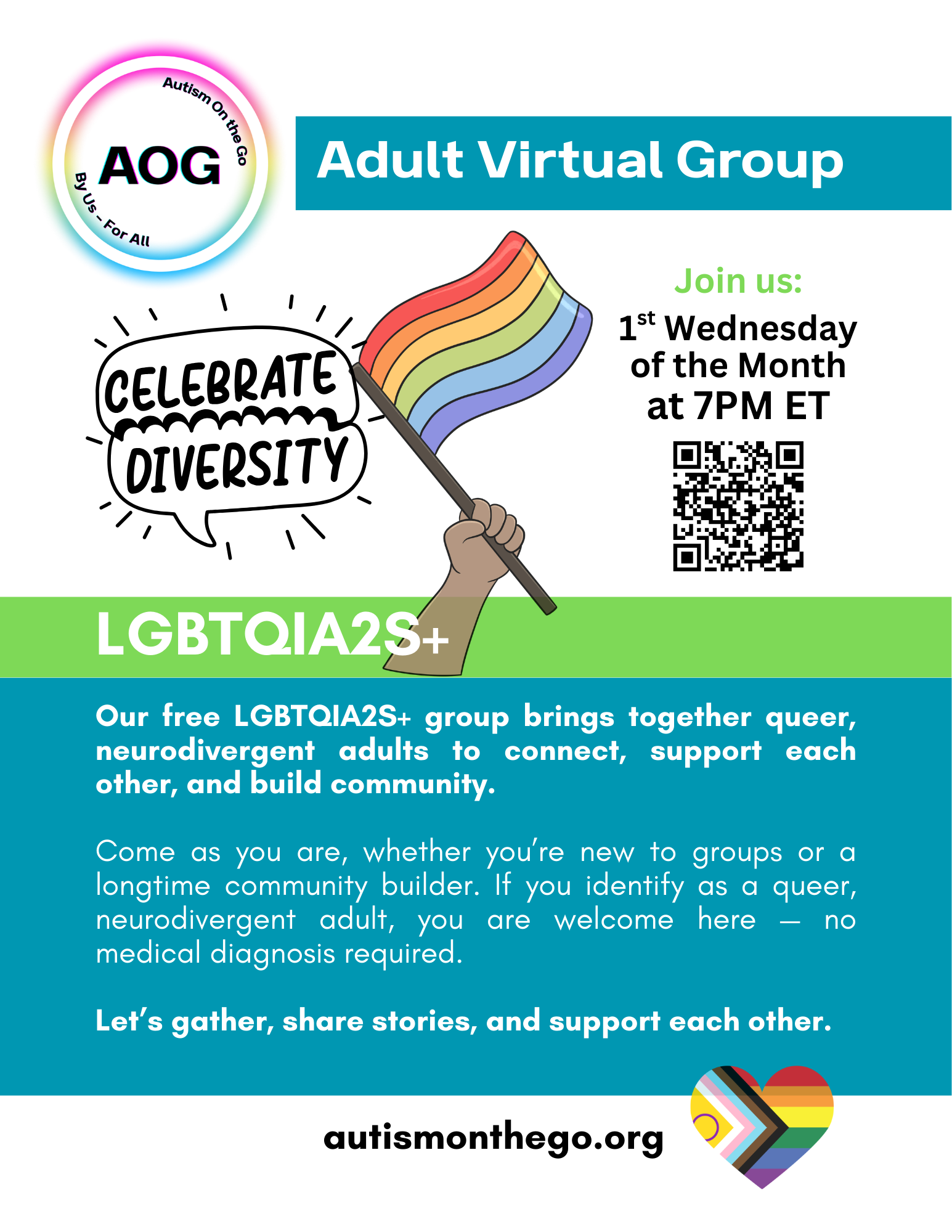
Finding a supportive community and making friends is key to happiness and well-being for everyone, especially Autistic adults. Oftentimes individuals make connections through formal social groups, recreational activities, and volunteering. Many Autistic adults also benefit from more structured programs to teach social and dating skills. This is a list of social opportunities listed by county. Items marked with an asterisk (*) indicates that virtual programming is available.
See also RELATIONSHIPS & DATING
ANNE ARUNDEL COUNTY
The FUSE is an inclusive 21+ nightclub where everyone – no matter their ability – gets to party without limits. Held the first Saturday of every month, the FUSE brings Maryland’s hottest performers to a venue built for inclusivity, energy and pure fun.
https://www.obiworks.org/the-fuse/
BALTIMORE CITY
Alex Palace, based in Baltimore, offers social inclusion and educational and employment opportunities to young adults with special needs, intellectual and developmental disabilities.
https://www.alexpalace.com/
Autism On the Go (AOG)* is a group by and for Autistic adults in the state of Maryland and beyond. Based in Baltimore, they hold weekly virtual meetings and in-person meetups and social events for Autistics, neurodivergents, and those exploring their identities on the spectrum.
https://www.meetup.com/autism-on-the-go-maryland/
Autism Society of Baltimore-Chesapeake (ASBC)* offers social and support group meetings for autistic individuals who are 18 or older. A monthly general session is open to anyone. These meetings provide a space to make connections in a casual social setting with other neurodiverse individuals. Check the website for dates.
https://www.baltimoreautismsociety.org/calendar-of-events/meetings-groups/
Baltimore Science Fiction Society
https://www.bsfs.org/
Make Studio is an inclusive space for artists with disabilities to create art and connect.
https://make-studio.org/
BALTIMORE COUNTY
The Hussman Center for Adults with Autism, Institute of Well-Being, at Towson University offers programs that bring together neurodiverse adults and Towson University students to participate in activities involving the arts, music, dance, and unified sports.
Friday Social Group is a social program offered during the academic year for neurodiverse adults and Towson University students to mingle. CLICK to register
Program Description: https://www.towson.edu/iwb/centers/hussman/groups.html
For information: 410-704-4486, email hcaa@towson.edu, bbunch@towson.edu
Pathfinders for Autism* hosts a virtual adult social group (18+). Meetings are held every other Thursday at 3:00 pm.
To register, https://secure.lglforms.com/form_engine/s/-RpnVHlPerRwkhs2VQKB8w
CARROLL COUNTY
Barrier Free offers classes in life skills and a social studio, expressive arts and music, individual skills coaching, and more. Locations in Sykesville and Westminster.
https://www.barrierfreemd.com/
Taylor's Place, based in Carroll County, creates inclusive social opportunities where adults with disabilities can build friendships, explore interests, and feel connected.
https://www.taylorsplacecommunity.org/
HOWARD COUNTY
Al's Love Cafe in historic Ellicott City offers training and employment for the neurodiversity community as well as a warm, cozy space to gather.
https://www.alslovecafe-md.com/
AUSOM Adult Social Group* meets twice monthly, usually on Saturdays from 5:30-7:30pm. One session is virtual by Zoom. The other session is in person at the AUSOM office in Columbia, MD or out in the community. Members of the group plan a variety of activities and outings to appeal to different interests. Members range in age from 24 to 50+ and participate independently. Complete the online membership form to receive the schedule of activities by email.
https://app.donorview.com/vGegx
Beyond Words is a vibrant and inclusive monthly class hosted at Howard County libraries designed to spark joy and ignite the imagination of participants (youth/”junior,” teen and adult) with developmental and intellectual disabilities. For information, https://www.hclibrary.org/blog/beyond-words/
CCTA's Expanding Horizons is a theater program for individuals with social and communication challenges.
https://cctarts.org/expanding-horizons/
GameOn Bar + Arcade in Columbia, Baltmore, Annapolis and DC
https://www.gameonbararcade.com/
Howard County's 50+ Centers offer fitness classes, educational programs, social activities, volunteer opportunities, and congregate lunches.
https://www.howardcountymd.gov/50Center
Howard County Recreation and Parks Therapeutic Recreation offers classes, social programs, a community choir, and dances for adults with disabilities.
https://www.howardcountymd.gov/t
Spirit Club Fitness offers a universal design for fitness that empowers people of all abilities to exercise successfully in a socially integrated setting.
https://www.spirit-club.com/
Yoga Connections* and Yoga Together [AUSOM] are free yoga classes (virtual and in-person) for teens and adults led by instructors from the Yoga Center of Columbia on Saturday afternoons. The in-person class, Yoga Together, is offered once a month at the Yoga Center. Participants need to complete a one-time registration to receive class announcements.
https://howard-Autism.org/event/yoga-for-children-teens-and-adults-28/
MONTGOMERY COUNTY
ArtStream offers tailored performing arts programs, classes, and performances for adults with disabilities, fostering inclusion and creativity.
https://art-stream.org
Creative Arts Center in Silver Spring offers art classes and art therapy.
https://createartscenter.org/
Fun Bunch Social Support Group is a Montgomery County-based support group for adults ages 18+. Members work on independence skills while meeting new friends.
https://thefunbunch.org/
Game Night Space in Rockville is a space for neurodivergent teens and adults to make connections through table-top game play.
https://gamenight.space/
The Hangout Hive is a social group based in Montgomery County for independent adults with learning disabilities aged 21 years of age and over.
https://hangouthive.org/
The Hangout Hub is a monthly program for adults with intellectual and developmental disabilities at a Montgomery County library. Participants listen to stories, chat with friends, enjoy snacks, play games in a relaxed, inclusive environment.
https://montgomerycountymd.gov/library/index.html
Jubilee Association of Maryland* offers social events like summer picnics, dances, trips, and holiday parties. Offers both in-person and virtual programs.
https://jubileemd.org/services-and-programs/creating-community/
Main Street Connect in Montgomery County offers over 70 inclusive activities and events each month.
https://mainstreetconnect.org/what/
Montgomery Parks offers adapted classes, inclusive recreational programs, and Trail Trekkers, an organized walking club designed for individuals with disabilities.
https://montgomeryparks.org/event_category/therapeutic-recreation/
NeuroNest Art is a welcoming, inclusive creative space for people of all ages in the DMV—especially those who have found traditional art settings overwhelming or inaccessible—regardless of neurotype or lived experience.
https://www.neuronest.art/home
Partners for Community Engagement, based in Montgomery County, provides engaging community social events and activities to adults with low-intensity support needs. They have social groups and a summer DMV Day Trippers Program.
https://www.pcengage.com/
Potomac Community Resources (PCR) is a nonprofit organization that promotes the inclusion of persons with developmental differences into the life of the community. PCR offers a range of recreational classes in fitness, music, communications, and more.
https://www.pcr-inc.org/who-we-are/
Slush and Krush Productions hosts monthly parties for neurodiverse young adults.
https://www.slush-krust-productions.com/
Spirit Club Fitness offers a universal design for fitness that empowers people of all abilities and ages to exercise successfully in a socially integrated setting.
https://www.spirit-club.com/
Upcounty Community Resources is a nonprofit organization that offers recreational and social events, including a walking club, music and art classes, and theater outings.
https://www.ucresources.org/#/
VisArts in Rockville offers the VisAbility Art Lab provides neurodiverse artists of all ages and abilities with a creative space, art materials, and guidance from professional artists.
https://www.visartscenter.org/
OUT-OF-STATE/VIRTUAL
Association for Autism and Neurodiversity (AANE), based in Massachusetts, offers virtual support groups and social opportunities:
https://www.aane.org/resources/adults/lifemap-coaching/
https://www.aane.org/events/
STATE-WIDE
Recreation and Parks therapeutic or adaptive recreation programs offer classes, social programs, and outings for adults with disabilities. For information, visit the website of your local Rec & Parks department. Find your local program here,
https://health.maryland.gov/phpa/ccdpc/HealthyLifestyles/Pages/Physical-Activity-Resources-by-County.aspx
https://www.aacounty.org/recreation-parks/recreation/recreation-programs/adaptive-programs
https://www.howardcountymd.gov/tr
https://www.montgomerycountymd.gov/rec/activitiesandprograms/therapeuticrec/
https://montgomeryparks.org/about/parks/accessibility/inclusive-special-events-and-programs/
https://www.montgomerycountymd.gov/montgomery-county-recreation/activities-programs/therapeutic-recreation
Special Olympics Maryland offers county and regional programs throughout the year for individuals with I/DD to participate and compete in a variety of sports that cater to all ages and athletic abilities. This free programming provides a supportive and inclusive environment for athletes and their families, with an emphasis on socializing and making connections with others.
https://www.somd.org/
https://www.somd.org/area-programs/
https://www.somd.org/local-programs/anne-arundel-county/
https://www.somd.org/area-programs/baltimore-county/
https://somdhc.org/ or 410-740-0500
https://somdmontgomery.org/ or 888-924-6965
WASHINGTON, DC
Autistics Association of Greater Washington, Inc. (AAGW)* serves Autistic adults in the District of Columbia, Maryland, Virginia, and the surrounding region. Currently, this group hosts meetings virtually with some in-person social events. They have monthly topic-based discussion and support meetings, biweekly informal discussion/chit-chat meetings, and a monthly Women with Autism Affinity Group. https://aagw.net/womens-group/
DC Peers offers free and low-cost social learning, social groups and social coaching for teens and adults. Programs bring neurodiverse groups together to socialize and to learn from each other.
https://www.dcpeers.org/